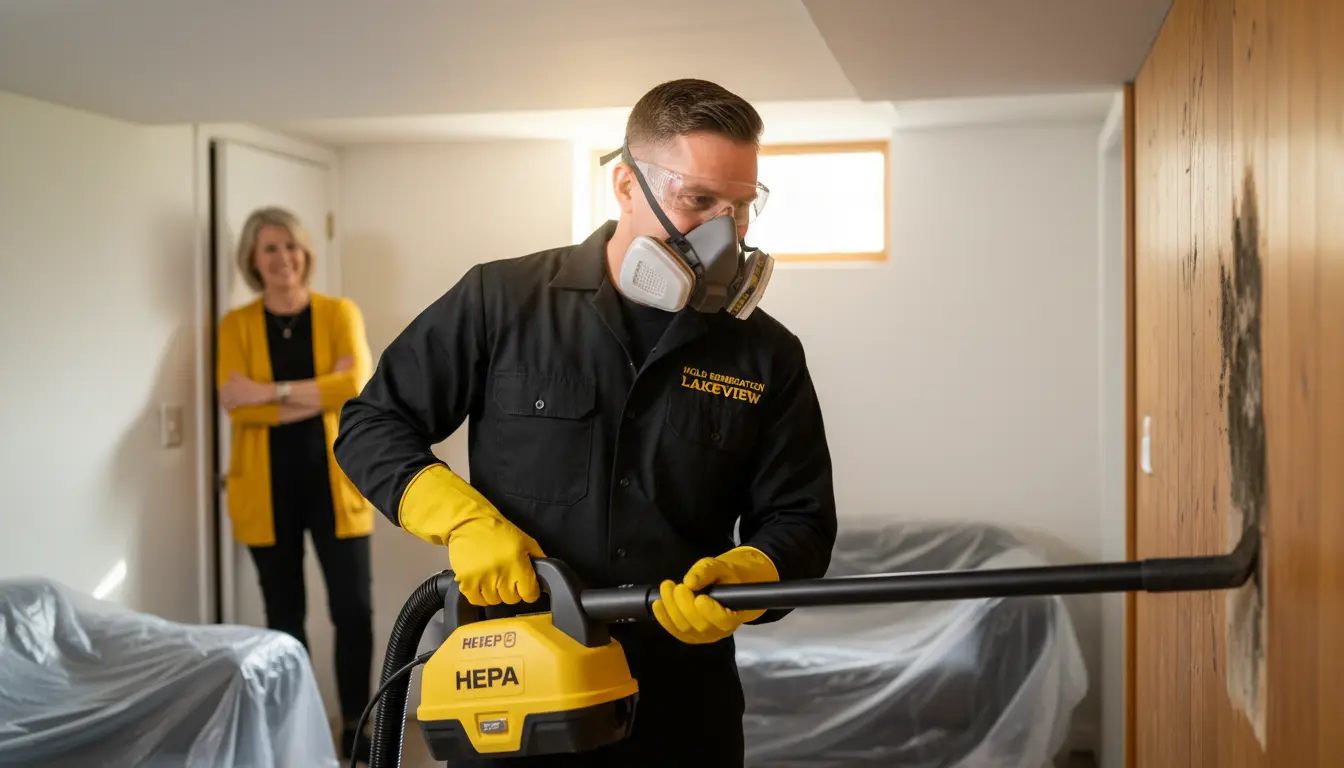
Living in Lakeview, with its humid climate and proximity to lush green spaces, can make your home a prime target for mold growth. As a resident, you might have heard countless stories about mold—some true, many not. At Mold Remediation Lakeview, we’ve seen it all: homeowners panicking over tiny spots or ignoring hidden dangers. But fear not! In this post, we’re debunking the most persistent mold myths to empower you with facts. Whether you’re in the heart of Lakeview or nearby neighborhoods like Floral Heights, understanding these myths can save you time, money, and health headaches. Let’s dive in and separate fact from fiction.
Myth 1: Mold Only Grows in Visible Damp Areas
One of the biggest misconceptions is that mold only thrives in obvious wet spots like leaky basements or bathroom tiles. While moisture is indeed mold’s best friend, it can sneakily develop in hidden places far from sight.
The Reality: Hidden Mold Hotspots in Lakeview Homes
In Lakeview’s older homes, with their charming but sometimes poorly insulated attics and crawl spaces, mold can flourish undetected. For instance, poor ventilation in attics during our humid summers can lead to condensation buildup. According to the EPA, mold spores are everywhere and only need a little moisture to activate—think of that small roof leak from last season’s heavy rains in the Sheppard area.
Practical Tip: Don’t wait for visible signs. Schedule a mold inspection to uncover hidden growth. Use a dehumidifier in basements and attics to keep humidity below 60%. In Lakeview, where spring floods are common, regularly check your gutters and downspouts to prevent water intrusion.
Actionable Advice: If you suspect attic issues, consider attic mold remediation services tailored to our local climate. Early detection prevents costly repairs—many Lakeview residents save thousands by acting proactively.
Myth 2: Bleach Is the Best Way to Kill Mold
You’ve probably reached for the bleach bottle at the first sign of black spots on your shower wall. It’s a common go-to, but is it effective? Spoiler: Not as much as you think.
Why Bleach Falls Short
Bleach kills surface mold on non-porous materials like glass, but it doesn’t penetrate porous surfaces like drywall or wood, common in Brookhollow residences. The mold roots (hyphae) remain, allowing regrowth. Plus, mixing bleach with ammonia (found in some cleaners) creates toxic fumes—dangerous in enclosed Lakeview homes.
Practical Tip: Opt for EPA-approved mold cleaners or professional help. For black mold, which often lurks in damp Lakeview basements, avoid DIY altogether. Our team at Mold Remediation Lakeview uses specialized black mold removal techniques that ensure complete eradication.
Actionable Advice: Test your air quality first with air quality testing to confirm mold presence. In humid spots like your kitchen, improve airflow with exhaust fans. Lakeview’s foggy mornings can exacerbate indoor moisture, so ventilate daily.
Myth 3: A Little Mold Isn’t Harmful
"It’s just a small patch," you might say, dismissing that fuzzy growth in the corner. But size isn’t the issue—it’s the spores.
Health Risks You Can’t Ignore
Mold spores can trigger allergies, asthma, and respiratory issues, especially for Lakeview families with children or elderly members. In our area, where pollen is already high, mold adds to the burden. The CDC notes that even small infestations can release thousands of spores daily, circulating through your HVAC system.
Practical Tip: If anyone in your household experiences unexplained sneezing or fatigue, it could be mold-related. In Allendale, we’ve treated homes where minor mold led to severe health scares.
Actionable Advice: Conduct mold testing annually, especially post-flood season. Clean HVAC filters monthly and use HEPA vacuums for dusting. For Lakeview’s variable weather, seal windows and doors to block outdoor spores.
Myth 4: Mold Spores Are Only an Outdoor Problem
Many believe mold is a garden issue, not an indoor one. Wrong! Indoor mold often stems from outdoor sources but thrives inside under the right conditions.
Indoor vs. Outdoor Mold in Lakeview
Lakeview’s lush parks and nearby lakes mean high outdoor spore counts, which hitch a ride indoors on clothes or pets. Once inside, poor circulation in cozy bungalows allows them to settle and grow.
Practical Tip: Keep doors and windows closed during high-spore seasons like fall in the Floral Heights vicinity. Use doormats and remove shoes to minimize tracking.
Actionable Advice: Integrate air quality testing into your home maintenance routine. For persistent issues, professional remediation ensures spores don’t return—vital for Lakeview’s tight-knit communities where homes are passed down generations.
Myth 5: You Can Prevent Mold Entirely with Regular Cleaning
Cleaning is great, but it’s not a silver bullet. Mold prevention requires addressing root causes like humidity and leaks.
Comprehensive Prevention Strategies
In Lakeview, where rainfall averages 50 inches yearly, proactive measures are key. Regular cleaning removes surface dirt but won’t fix underlying moisture problems.
Practical Tip: Monitor humidity with a hygrometer and aim for 30-50%. Fix leaks immediately—our recent rains in Sheppard have caused spikes in calls.
Actionable Advice: Insulate pipes to prevent condensation, and use mold-resistant paints in bathrooms. If mold persists, don’t hesitate to call for mold inspection—prevention is cheaper than cure.
FAQ: Common Questions About Mold in Lakeview
1. How do I know if I have mold in my Lakeview home?
Look for musty odors, water stains, or allergy symptoms. A professional mold testing provides certainty, especially in hidden areas like attics.
2. Is black mold more dangerous than other types?
All molds can be harmful, but black mold (Stachybotrys) produces mycotoxins. In Lakeview’s damp environments, black mold removal is essential for safety.
3. Can I DIY mold remediation?
For small, non-porous areas, yes—but for anything larger or porous, hire pros. DIY in Lakeview’s older homes risks spreading spores via inadequate tools.
4. How often should I test for mold?
Annually or after water events. Air quality testing in humid seasons keeps your home safe.
5. Does insurance cover mold remediation in Lakeview?
It depends on the cause—flood vs. neglect. Contact your provider and our team at Mold Remediation Lakeview for guidance.
Conclusion: Take Control of Mold in Your Lakeview Home
Debunking these myths arms you with the knowledge to protect your family and property. From hidden attic growth to the pitfalls of bleach, mold in Lakeview demands respect and action. Don’t let misinformation lead to bigger problems—reach out to Mold Remediation Lakeview today for a free consultation. Whether in Lakeview proper or surrounding areas like Brookhollow, we’re here to restore your peace of mind. Schedule your mold inspection now and breathe easier!
(Word count: 1247)