Imagine waking up to the sound of pouring rain in Lakeview, only to discover your home has been inundated by one of Texas’s notorious flash floods. The water recedes, but the real threat lingers: mold. As a resident of this vibrant Wichita Falls community, you know how quickly our humid climate can turn a flooded basement or soaked carpet into a breeding ground for harmful mold spores. At Mold Remediation Lakeview, we’ve seen the devastation firsthand and are here to guide you through emergency mold cleanup. In this post, we’ll cover the risks, steps to take, and why professional help is essential to safeguard your family’s health and property.
Texas floods, especially in areas like Lakeview, can strike without warning, leaving behind moisture that fuels rapid mold proliferation. Acting swiftly isn’t just about restoration—it’s about preventing long-term health issues and structural damage. Let’s dive into how you can respond effectively.
Understanding the Risks of Mold After Floods
Floodwater from Texas storms often carries contaminants, creating the perfect storm (pun intended) for mold growth. In Lakeview’s residential neighborhoods, where homes are built close to the ground and surrounded by lush greenery, this risk is amplified. Mold can start growing within 24-48 hours of water exposure, spreading invisibly through walls, floors, and HVAC systems.
Why Floods Lead to Mold Growth in Lakeview Homes
The combination of standing water, high humidity, and organic materials in your home—like drywall, wood, and insulation—provides mold with everything it needs to thrive. In Lakeview, our proximity to the Wichita River means floods can deposit silt and bacteria-laden water, exacerbating the problem. Unlike dry spills, floodwater soaks deeply, making DIY drying insufficient. We’ve assisted countless families in nearby Hirschi after similar events, where unchecked moisture led to widespread infestations.
Mold spores are microscopic and airborne, meaning they can travel from one room to another or even affect the attic. If your home has an attic prone to leaks, consider our specialized attic mold remediation services to prevent escalation.
Health Impacts of Post-Flood Mold Exposure
Exposure to mold isn’t just an aesthetic issue; it poses serious health risks. Symptoms range from mild allergic reactions like sneezing and itchy eyes to severe respiratory problems, especially for children, the elderly, and those with asthma. In black mold cases—common after floods due to stagnant water—toxins like mycotoxins can cause neurological issues or chronic fatigue.
For Lakeview residents, who often enjoy outdoor activities in Floral Heights, bringing mold indoors can disrupt your lifestyle. Early detection through air quality testing is crucial, as invisible spores can circulate via your home’s ventilation, worsening indoor air quality.
Immediate Steps for Emergency Mold Cleanup
Time is of the essence when dealing with flood-induced mold. Delaying action can turn a manageable problem into a costly nightmare. Here’s a step-by-step guide to get started right away.
Step 1: Ensure Safety and Assess the Damage
Before touching anything, prioritize safety. Turn off electricity in affected areas to avoid shocks, and wear protective gear like gloves, masks, and goggles. In Lakeview’s variable weather, ventilate by opening windows if outdoor humidity isn’t too high—but avoid this if storms persist.
Assess the extent: Look for visible signs like musty odors, discolored walls, or warped floors. For floor-level flooding, common in Brookhollow homes, check carpets and subfloors immediately. If you spot dark patches, it could be black mold removal territory—don’t attempt this alone, as it requires professional containment.
Step 2: Remove Water and Dry the Area Thoroughly
Extract standing water using pumps or wet vacuums. For Lakeview properties with basements, this is vital as groundwater can linger. Use dehumidifiers and high-velocity fans to dry surfaces; aim for under 60% humidity within 48 hours.
Practical tip: Elevate furniture on blocks and remove soaked items like rugs to a sunny spot if possible. However, for extensive water damage, call in experts for industrial-grade drying equipment. Our team at Mold Remediation Lakeview uses advanced tools to ensure no moisture pockets remain, preventing hidden mold growth.
Step 3: Clean and Disinfect Affected Surfaces
Once dry, clean non-porous surfaces with a mold-killing solution like a bleach-water mix (1 cup bleach to 1 gallon water). For porous materials like drywall, removal may be necessary if mold penetrates more than 10 square feet.
Actionable advice: Scrub gently to avoid spreading spores, and dispose of contaminated materials in sealed bags. In ceiling areas, which often hide flood damage in Lakeview’s older homes, opt for ceiling mold treatment to address overhead threats without compromising structure.
For floors, especially hardwood or tile in flood-prone Country Club Gardens, professional floor mold cleanup ensures thorough sanitation and restoration.
When to Call Professional Mold Remediation in Lakeview
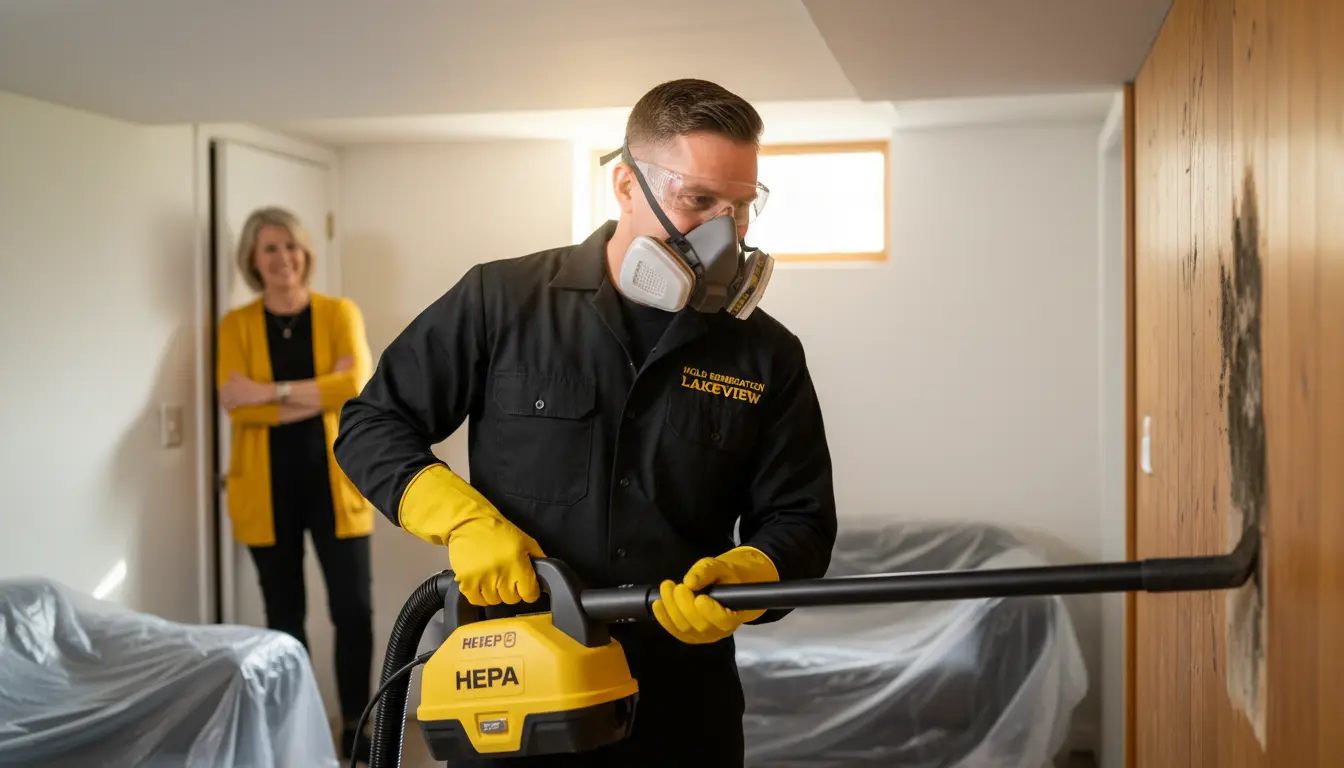
While initial steps are important, professional intervention is non-negotiable for comprehensive cleanup. At Mold Remediation Lakeview, we specialize in IICRC-certified emergency services tailored to Texas flood scenarios. Our 24/7 response team arrives equipped with HEPA vacuums, antimicrobial treatments, and containment barriers to isolate affected areas.
Why choose us? We’re local experts familiar with Lakeview’s unique challenges, from river overflow in Sheppard to urban flooding in denser spots. We handle everything from inspection to full restoration, ensuring your home meets health standards.
In one recent case, a Lakeview family post-flood discovered extensive attic mold; our remediation restored their space in under a week, preventing health scares. Don’t risk incomplete cleanup—professionals use moisture meters and infrared cameras to detect hidden issues DIY methods miss.
Prevention Tips to Avoid Future Mold Issues After Floods
Cleanup is only half the battle. To protect your Lakeview home long-term:
-
Install Flood Barriers and Sump Pumps: Elevate appliances and use barriers for entry points. In low-lying areas like Hirschi, sump pumps with battery backups are lifesavers.
-
Maintain Gutters and Drainage: Clear debris regularly to direct water away from foundations. Lakeview’s heavy spring rains demand vigilant upkeep.
-
Monitor Humidity Levels: Use hygrometers and dehumidifiers year-round, especially in humid Texas summers.
-
Seal Cracks and Improve Ventilation: Caulk gaps around windows and ensure attic vents work properly. Regular air quality testing can catch issues early.
-
Document for Insurance: Keep records of cleanup for claims; our detailed reports at Mold Remediation Lakeview streamline this process.
Implementing these tips reduces recurrence risks by up to 70%, based on industry studies.
FAQ: Common Questions About Emergency Mold Cleanup After Texas Floods
1. How soon after a flood should I start mold cleanup?
Start within 24-48 hours to prevent growth. Delaying beyond that increases health risks and repair costs.
2. Can I handle mold cleanup myself in Lakeview?
For small areas under 10 square feet, yes—but floods often exceed this. Professionals ensure safe, complete removal without spreading spores.
3. What are the signs of black mold after flooding?
Look for black, slimy patches with a musty smell. It’s toxic, so contact experts for black mold removal immediately.
4. Does homeowners insurance cover mold cleanup post-flood?
It depends on your policy; flood damage often requires separate coverage. We assist with claims to maximize your benefits.
5. How long does professional mold remediation take?
Typically 3-7 days, depending on damage extent. Our Lakeview team prioritizes quick, efficient service to minimize disruption.
Conclusion: Act Now to Restore and Protect Your Lakeview Home
Texas floods may be unavoidable, but mold damage doesn’t have to be. By understanding the risks, taking immediate action, and partnering with trusted professionals like Mold Remediation Lakeview, you can reclaim your safe, healthy living space. We’ve proudly served Lakeview families for years, turning flood aftermaths into stories of resilience.
Don’t wait for symptoms to appear—contact Mold Remediation Lakeview today for a free inspection and emergency mold cleanup. Call us at (940) 123-4567 or visit our site to schedule. Your home deserves the best protection against Texas’s unpredictable weather.
(Word count: 1,248)